
How MUFG Is Shaping the Future of Talent and Workforce
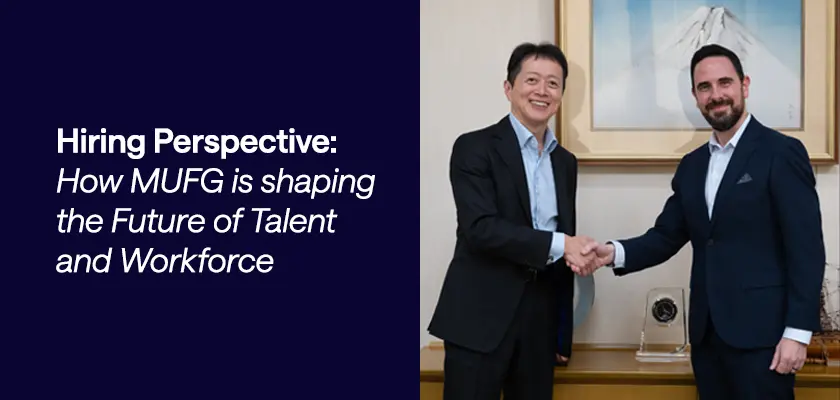
MUFG (Mitsubishi UFJ Financial Group) is a comprehensive financial group with an extensive global network, offering a wide range of businesses centered around finance — the foundation of all industries.
As a long‑standing recruitment partner of MUFG, Bruno Marchand, Strategic Account Director of Hays Asia Enterprise Solutions, visited the company’s Tokyo office to interview Mr. Masahiro Kuniyuki, Managing Corporate Executive, Group CHRO at MUFG, based on insights from its latest Human Capital Report 2025, discussing MUFG’s recent initiatives, evolving talent strategy, DEI progress, and future vision.
Increasing Mid-Career Hiring
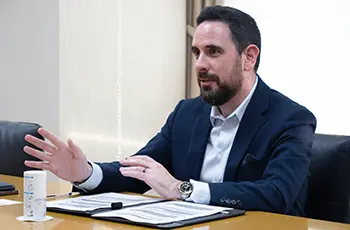 Mr. Marchand:
Thank you again for welcoming us today. We’ve been partnering with MUFG for many years, and with the release of several recent Human Capital Reports, we felt this was a great opportunity to discuss your latest initiatives and your perspectives on talent and recruitment in Japan.
To start, we’ve observed a notable increase in mid‑career hiring from your orgnaisation. From your perspective, what is driving this trend, and what kind of talent are you focusing on recruiting?
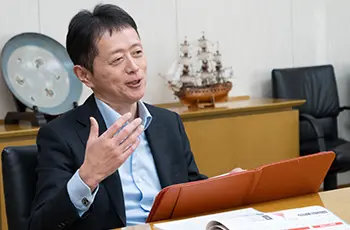 Mr. Kuniyuki:
There are several reasons behind the increase in mid-career hiring. Our businesses have become highly specialised, and we now require talent with first-hand expertise in fields such as digital transformation, wealth management, and sustainability/ESG.
These areas are not typically covered in university education, so hiring experienced professionals has become essential.
Every three years, we develop a mid-term business plan, in which we position DX (such as data analytics, engineering, and cybersecurity), wealth management (providing comprehensive asset management and optimisation services for high-net-worth individuals and corporate clients), and sustainability (including climate-related risk management and sustainable finance) as priority areas. These areas require a particularly high level of expertise, and the pace at which we need to strengthen our workforce in these fields exceeds the speed at which new graduates can be developed, making it essential for us to bring in experienced specialists from outside the organisation.
We have expanded our recruitment channels, strengthened partnerships with recruitment firms such as Hays, and increased our visibility through university outreach, advertisements, and even TV commercials featuring senior executives. These efforts have improved our brand recognition and made MUFG a more attractive employer for both students and mid-career candidates.
Factors Behind High Employee Engagement
Mr. Marchand:
Your Human Capital Report highlights a very strong engagement score of 76%, representing the percentage of employees who responded positively to our engagement survey questions. What do you believe has contributed most to this result?
Your Human Capital Report highlights a very strong engagement score of 76%, representing the percentage of employees who responded positively to our engagement survey questions. What do you believe has contributed most to this result?
Mr. Kuniyuki:
We place a strong emphasis on autonomous career development. Rather than the company dictating career paths, we encourage employees to reflect on what kind of career they want to build.
We place a strong emphasis on autonomous career development. Rather than the company dictating career paths, we encourage employees to reflect on what kind of career they want to build.
To drive and expand this movement, we have strengthened several initiatives:
• Workshops that help employees articulate the overlap between the MUFG Way—which guides all of our corporate activities—and their own personal values (“My Way”), combined with peer-to-peer dialogue sessions
• Town hall-style dialog event with senior management
• Expanded opportunities that support employees in taking on new challenges and exploring new roles and experiences
These opportunities help employees think about their careers proactively. When people feel empowered to choose their own direction—and know the company supports them—it naturally leads to higher engagement.
Advancing Women in Management
Mr. Marchand:
MUFG has made significant efforts to increase the number of women in management positions. Could you share what initiatives have been particularly effective, especially for mid‑career hires?
MUFG has made significant efforts to increase the number of women in management positions. Could you share what initiatives have been particularly effective, especially for mid‑career hires?
Mr. Kuniyuki:
DEI remains a critical driver of innovation at MUFG.
Our ratio of women in management positions has improved by four percentage points over the past two years— and reached 24% in FY2024. Our target is 30% by 2030, and we intend to continue raising the bar.
DEI remains a critical driver of innovation at MUFG.
Our ratio of women in management positions has improved by four percentage points over the past two years— and reached 24% in FY2024. Our target is 30% by 2030, and we intend to continue raising the bar.
 Key initiatives include:
• DEI forums for managers led by senior executives to raise awareness and commitment among supervisors
• Group-wide “cascade” messaging, in which DEI messages from top management are communicated across all MUFG group companies and their general managers (GMs)
• An executive mentoring program, where senior executives mentor three to four female leadership candidates each year
• Deliberate and structured succession planning to develop future generations of female managers
Some employees question whether this favors women unfairly. However, as our CEO stated, this is not discrimination—it is a necessary correction of long-standing historical imbalance. Strong actions are sometimes required to accelerate change.
Supporting Autonomous Career Development
Mr. Marchand:
Among the various initiatives mentioned in MUFG CEO’s message on autonomous career development, which have been especially effective for mid‑career hires?
Among the various initiatives mentioned in MUFG CEO’s message on autonomous career development, which have been especially effective for mid‑career hires?
Mr. Kuniyuki:
Our programs linking MUFG Way with each employee’s personal way — including MUFG sharing session and town hall dialogues that support autonomous career development — have been particularly impactful. Mid career hires often join with well-formed perspectives, and these dialogues with senior leaders help them quickly understand how their values align with the company’s direction. This, in turn, supports strong early engagement and smooth integration into the organization.
Shifting Away from Seniority-Based Systems
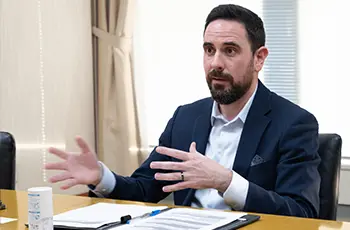 Mr. Marchand:
In the report, it mentioned the traditional seniority-based system is still common in Japan and in the financial industry. What strategies is MUFG implementing to move toward a more merit-based model?
Mr. Kuniyuki:
I don’t believe seniority is inherently bad, but relying on tenure alone tends to lead to weak evaluation practices in Japan. We are shifting toward assessing people based on their roles, outcomes, and demonstrated capabilities.
I don’t believe seniority is inherently bad, but relying on tenure alone tends to lead to weak evaluation practices in Japan. We are shifting toward assessing people based on their roles, outcomes, and demonstrated capabilities.
Promotion decisions do not depend on whether someone joined as a new graduate or mid-career hire. If someone has proven their ability, they deserve to be promoted, regardless of their years of experience. This is how we strengthen meritocracy at MUFG.
DEI in a Globalising Workforce
Mr. Marchand:
MUFG now has 150,000 employees worldwide, with 100,000 working outside Japan. How has your approach to DEI evolved in such a global context?
MUFG now has 150,000 employees worldwide, with 100,000 working outside Japan. How has your approach to DEI evolved in such a global context?
Mr. Kuniyuki:
MUFG has a global DEI structure jointly led by a Japanese female leader and an American female leader. This organisation works across the U.S., Europe, and Asia to share best practices worldwide.
Compared with thirty years ago, MUFG—and Japan overall—has become far more diverse. This ability to continuously refine our operations across regions, grounded in the progress we have made in diversity, is a major strength of MUFG.
Balancing Internal Development and External Hiring
Mr. Marchand:
MUFG has been strengthening its specialist workforce—DX, wealth management, sustainability. How do you balance upskilling internal talent with hiring external experts?
MUFG has been strengthening its specialist workforce—DX, wealth management, sustainability. How do you balance upskilling internal talent with hiring external experts?
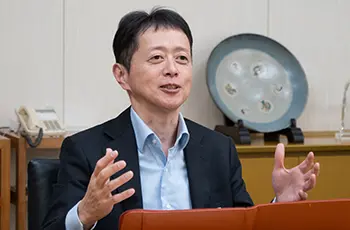 Mr. Kuniyuki:
We are advancing talent development for new graduates and external hiring in parallel. Mid career hires bring immediate technical expertise, but there are always certain hurdles during the initial ramp-up. For this reason, we must strike the right balance between developing internal talent and supplementing our capabilities with experienced professionals from outside the organization.
At MUFG, we place strong emphasis on onboarding and early-stage development programmes. As a result, satisfaction among mid-career hires has continued to improve, and retention rate have been steadily rising.
Attracting Specialist Talent Externally
Mr. Marchand:
As MUFG strengthens mid-career recruitment to secure specialists who can contribute immediately, what initiatives are you prioritizing to attract external talent more effectively?
As MUFG strengthens mid-career recruitment to secure specialists who can contribute immediately, what initiatives are you prioritizing to attract external talent more effectively?
Mr. Kuniyuki:
We are diversifying our recruitment systems to bring in individuals from diverse backgrounds—including young talent who have specialised in particular fields, expanding the track based hiring model. In addition, the diversification of career paths now allows candidates to more autonomously choose between deepening their expertise and broadening their career horizons.
We are diversifying our recruitment systems to bring in individuals from diverse backgrounds—including young talent who have specialised in particular fields, expanding the track based hiring model. In addition, the diversification of career paths now allows candidates to more autonomously choose between deepening their expertise and broadening their career horizons.
We aim to build an environment where anyone—women, senior employees, and specialised professionals, or even generalists with broad capability—can thrive. This inclusive and flexible approach helps make MUFG an attractive employer for specialist talent.
Developing New HR Systems
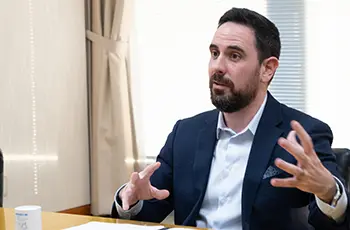 Mr. Marchand:
Initiatives such as the track-based recruitment represent clear changes in HR practices. What were the key motivations behind creating these new systems?
Mr. Kuniyuki:
The world is changing quickly, and we cannot rely on old systems forever. We want to embrace new approaches that support different career aspirations and working styles across diverse groups of employees —including young professionals, those balancing childcare or caregiving, senior employees, and specialised talent. By updating our HR systems, we aim to enhance organisational strength and create an environment where diverse professionals can contribute fully at every life stage.
The world is changing quickly, and we cannot rely on old systems forever. We want to embrace new approaches that support different career aspirations and working styles across diverse groups of employees —including young professionals, those balancing childcare or caregiving, senior employees, and specialised talent. By updating our HR systems, we aim to enhance organisational strength and create an environment where diverse professionals can contribute fully at every life stage.
Talent Strategy Since MUFG’s 2021 Transformation
Mr. Marchand:
Since MUFG began its business model transformation in 2021, how have your talent acquisition and retention strategies evolved? What has changed, and what has remained consistent?
Since MUFG began its business model transformation in 2021, how have your talent acquisition and retention strategies evolved? What has changed, and what has remained consistent?
Mr. Kuniyuki:
We have evolved significantly in various HR initiatives such as DEI, engagement, and health management. Yet one fundamental belief remains unchanged:
“Employees are the company itself.”
Not systems, not external stakeholders—employees.
This philosophy continues to guide our reforms and remains central to MUFG’s identity.
MUFG’s Vision for the Next Five Years
Mr. Marchand:
Looking ahead, what kind of company does MUFG aim to be over the next five years, and how do you see your workforce contributing to society and the industry?
Looking ahead, what kind of company does MUFG aim to be over the next five years, and how do you see your workforce contributing to society and the industry?
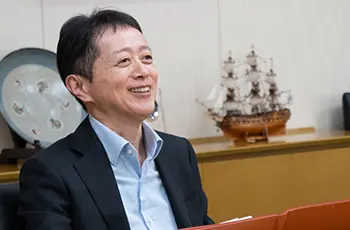 Mr. Kuniyuki:
 Over the past three decades, Japan’s global presence has declined. Population decline, lower economic power—these are real challenges. MUFG wants to help reverse this trend and re‑energise Japan, the market where our foundations lie.
MUFG’s purpose, “Committed to empowering a brighter future,” means achieving sustainable growth while contributing to solving social challenges. By empowering diverse talent and creating new value, we believe we can make a meaningful impact.
We aim to support individuals and companies by solving their issues through the full capabilities of MUFG—from financial advisory to real estate brokerage and beyond. If we can help our customers grow and Japan becomes stronger again, MUFG will also become stronger. With our global network, we can then contribute even more to the world. That is my dream.
Collaboration with Hays
Mr. Marchand:
We’ve had the privilege of partnering with MUFG for many years. From your perspective, what value do we bring, and what more can we do to support your ambitions?
We’ve had the privilege of partnering with MUFG for many years. From your perspective, what value do we bring, and what more can we do to support your ambitions?
Mr. Kuniyuki:
We would appreciate even stronger access to global top talent. MUFG is well-known in Japan, but overseas we are not always recognised as a top-tier employer. Hays can help connect us to the right talent pools worldwide.
Additionally, we believe Hays can support us in building better global governance and accelerating our journey toward becoming a more globally integrated organisation.
MUFG is undergoing a major transformation. In the HR domain, we are simultaneously advancing a wide range of initiatives—including enhancing professional capability building, autonomous career development, DEI, improving employee wellbeing, and modernising HR systems. Hays continues to support leading global companies by providing talent solutions and workforce strategies that drive sustainable business growth.
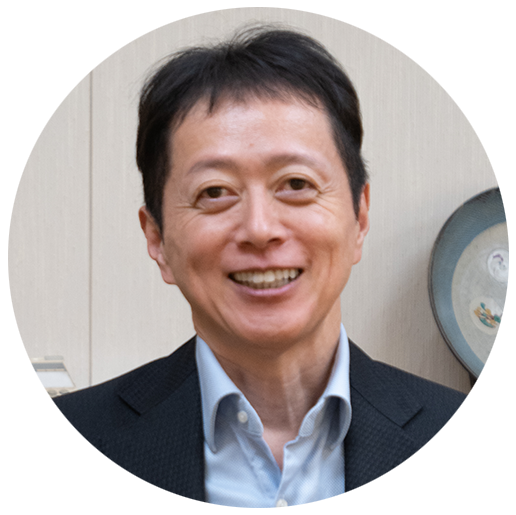
MUFG
Group CHRO
Managing Corporate Executive
Masahiro Kuniyuki
Masahiro Kuniyuki joined Mitsubishi Trust and Banking Corporation in 1994. He has since held a number of senior roles, including positions in MUFG’s Corporate Planning Division, the New York Branch of Mitsubishi UFJ Trust and Banking Corporation, and the Markets and Global Business Planning Division. He also served as Co-CEO of the company’s UK entity and as Managing Executive Officer and Head of the Financial Planning Division at MUFG and MUFG Bank. He assumed his current position in April 2025.
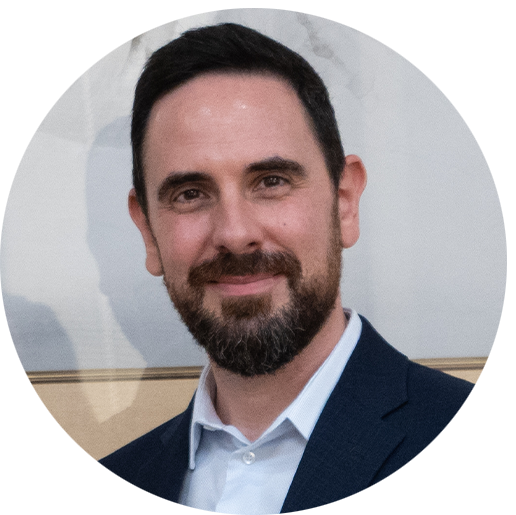
Hays Asia Enterprise Solutions
Strategic Account Director
Bruno Marchand

Recruiting
now?
Sourcing candidates for a new or upcoming role? Tap into our network and expertise.
Register your vacancy

Outsourcing recruitment?
We offer MSP, RPO and other solutions to meet your unique workforce needs.
Scale with experts

Explore contracting solutions
Discover how we bring you experts on demand to deliver optimal business outcomes.
Unlock business potential

Hiring
perspective
Learn what companies look for when hiring and the strategies they use to attract top talent.
Browse our interviews

Hays Asia
Salary Guide
2025
The latest info about salaries, hiring trends, and workplace priorities for Japan and across Asia.
Unlock new insights